Korean Language
About
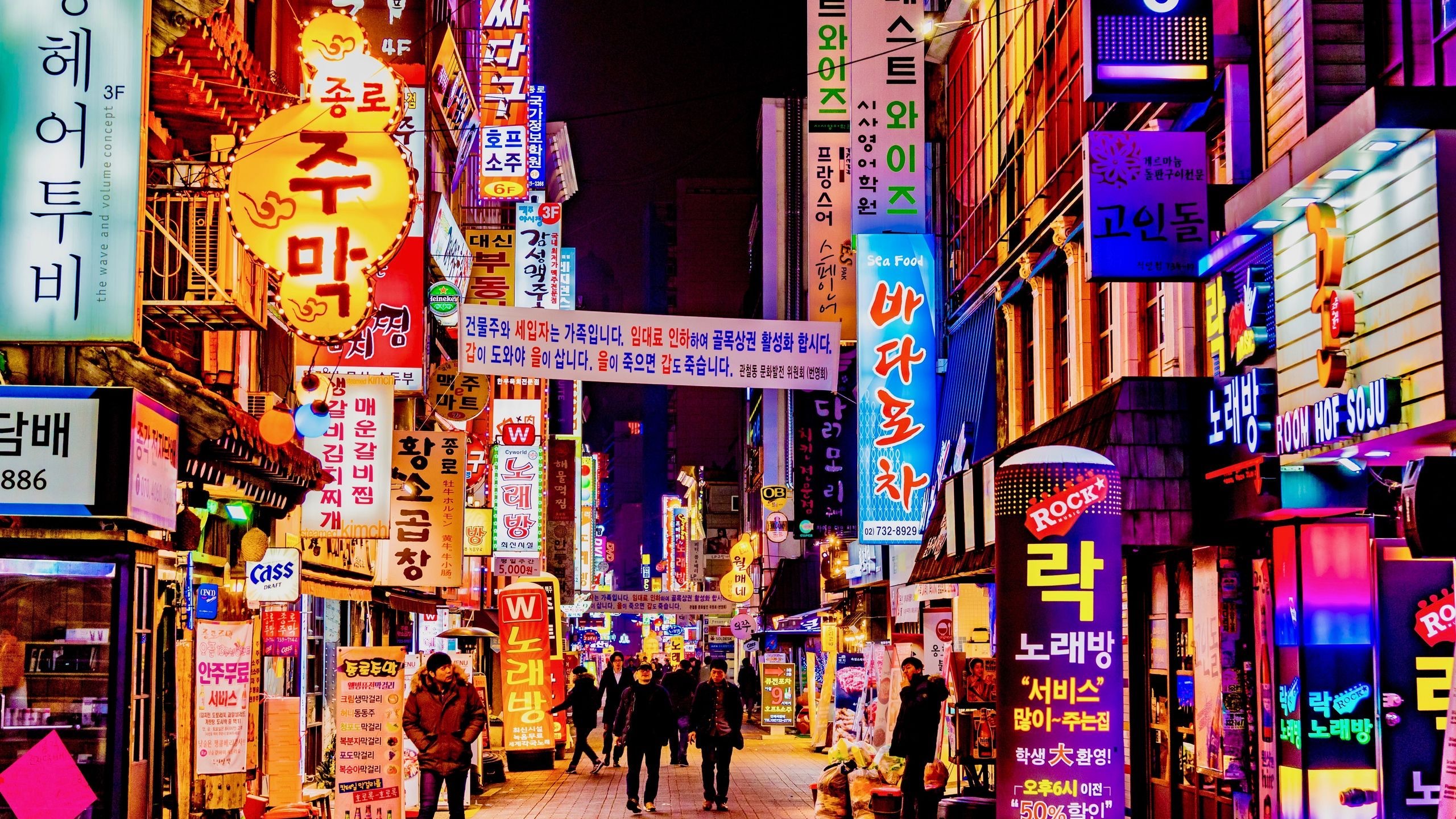
Korean is a native language of over 80 million people, the national language of Korea, the heritage language of diasporas in the US, China, Russia, Central Asia, and Latin America. Since the 21st century, it has also become a global language through the spread of Korean popular culture.
Korean Language at UCLA
Since Korean language instruction was first offered at UCLA in 1986, the Korean Language Program has become one of the top Korean language programs in the United States. The program offers four years of undergraduate Korean language instruction, heritage and non-heritage tracks, and advanced elective courses to build fluency and facilitate language acquisition. The graduates of our programs have gone on to become professionals in a wide range of fields including government, business, education, entertainment, research, mental health, law enforcement, education and more.
The Korean language program is designed to meet the diverse needs of learners and align with broader educational objectives. These include
- Language Proficiency: Develop comprehensive skills in speaking, listening, reading, and writing in Korean, enabling effective communication in various contexts.
- Cultural Understanding: Enhance students’ appreciation of Korean culture, history, and traditions, fostering intercultural competence.
- Academic and Professional Preparation: Prepare students to function successfully in academic or professional fields related to Korean studies, such as translation, interpretation, and cultural specialization.
- Global Leadership: Cultivate translingual and transcultural competence, empowering students to become competent global leaders.
- Real-Life Application: Provide opportunities for students to apply their linguistic and cultural knowledge to real-life situations through authentic materials and tasks.
Korean Language Instructional Faculty
The Korean language faculty have decades of professional experience and work regularly to develop innovative pedagogy and language-learning resources. We aim to:
- Equip students with level-appropriate Korean language proficiency skills
- Cultivate students’ professional and global competencies by enhancing learners’ intercultural communication skills
- Empower students through supportive learning communities in and outside of the classroom
-

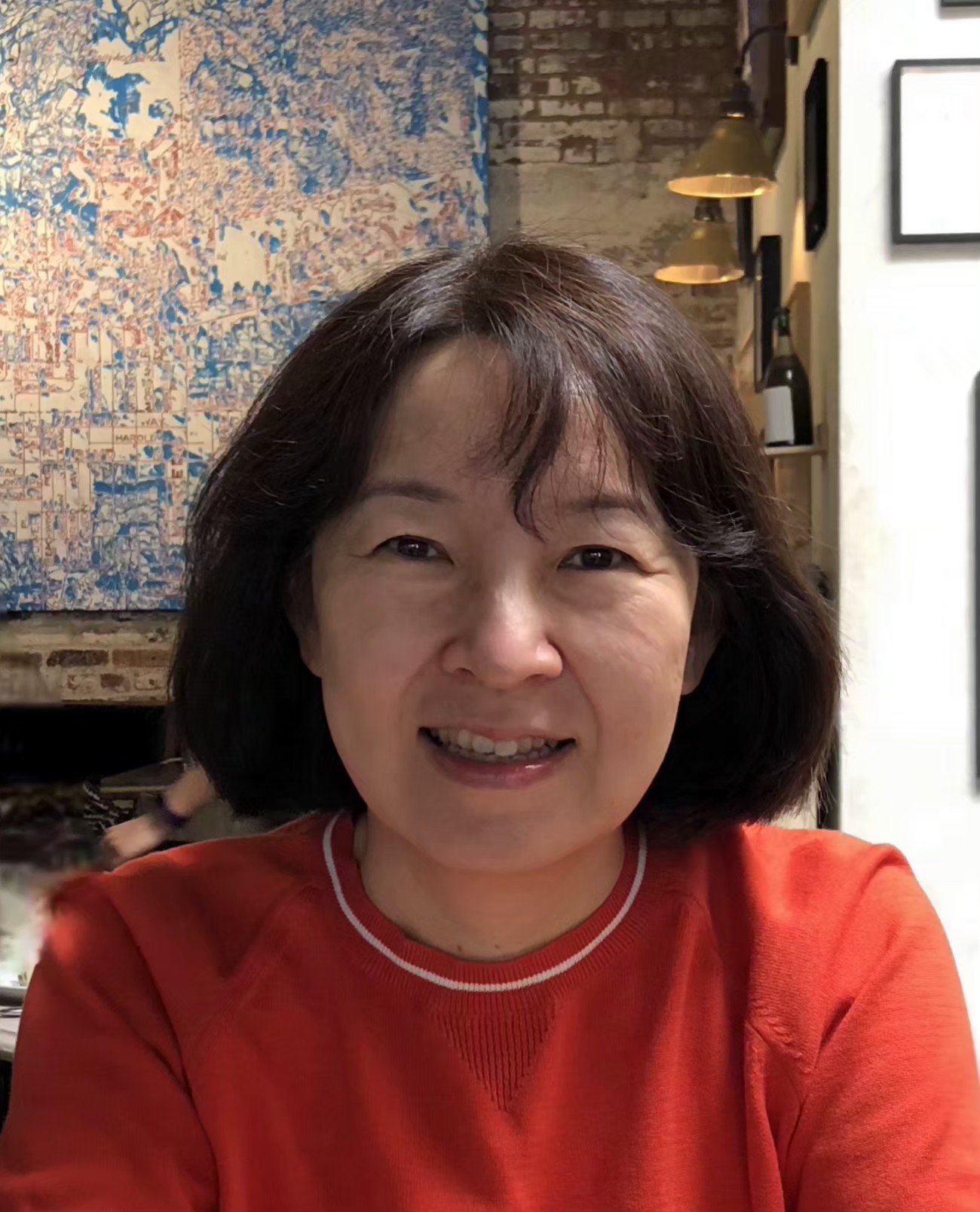
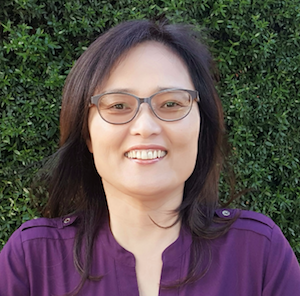
Jane Choi
Senior Lecturer
Korean Language and Functional Linguistics, Second/Foreign Language Education
-
-
-
-
Curricular Roadmap
Four-Year Core Sequence
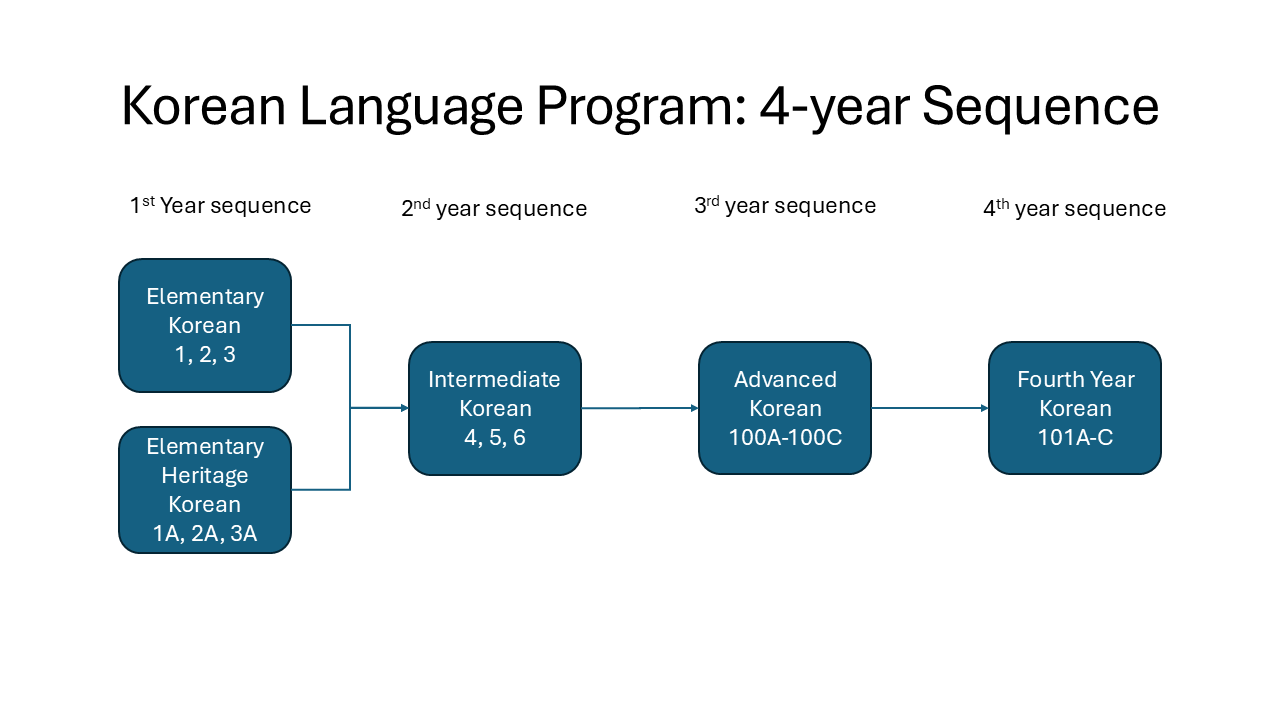
The core of the Korean language program is a four-year sequence. Courses in the core sequence target Korean language acquisition with the aim to achieve advanced fluency by the end of the four-years. Courses target listening, speaking, reading, and writing, covering both oral and written skills.
Students with no prior knowledge of Korean should enroll in Korean 1, which is offered every Fall quarter. Heritage speakers of Korean can opt to enroll in Korean 1A: Elementary Korean for Korean-Heritage Speakers, which is also offered every Fall quarter.
Enrollment in any other Korean courses and levels require fulfilling existing prerequisites or completing a placement examination.
First-Year Sequence
Prerequisites: none for fall enrollment. Courses must be taken in sequence. I.e. Korea 2 requires taking Korea 1; Korea 3 requires Korean 2 or Placement Exam
| Course Title | Fall | Winter | Spring |
|---|---|---|---|
| Elementary Modern Korean | KOREA 1 | KOREA 2 | KOREA 3 |
| Elementary Korean for Korean-Heritage Speakers | KOREA 1A | KOREA 2A | KOREA 3A |
Second-Year Sequence
Prerequisites: Completion of First-Year Sequence (Korea 3 or 3A) OR Placement Exam; Courses must be taken in sequence. I.e. Korea 5 requires taking Korea 4; Korea 6 requires Korean 5
| Course Title | Fall | Winter | Spring |
|---|---|---|---|
| Intermediate Modern Korean | KOREA 4 | KOREA 5 | KOREA 6 |
Third-Year Sequence
Prerequisites: Completion of Second-Year Sequence (Korea 6) OR Placement Exam; Courses must be taken in sequence. I.e. Korea 100B requires taking Korea 100A; Korea 100C requires Korean 100B
| Course Title | Fall | Winter | Spring |
|---|---|---|---|
| Advanced Modern Korean | KOREA 100A | KOREA 100B | KOREA 100C |
Fourth-year Sequence
Prerequisites: Completion of Second-Year Sequence (Korea 100C) OR Placement Exam; Courses may be taken out of sequence.
| Course Title | Fall | Winter | Spring |
|---|---|---|---|
| Fourth Year Korean | KOREA 101A | KOREA 101B | KOREA 101C |
Advanced Electives
The Korean language program also offers advanced electives outside the four-year core sequence.
KOREA 102A-C: Advanced Korean Conversation
KOREA 103A-B: Learning Sino-Korean Characters
KOREA 104: Variable Topics in Advanced Korean: Languages, Society, and Culture
KOREA 105: Fifth Year-Korean: High-Advanced Speaking, Listening, Reading, and Writing
KOREA 148A: Reading Modern Korean Academic Texts
Textbooks and Learning Materials
Additional Resources
For more information about our majors, please contact the ALC Undergraduate Student Affairs Officer